Key Takeaways
- Dead spots in lawns are rarely random; they always have an underlying cause that must be identified before treatment begins.
- Palm City’s subtropical climate creates conditions that accelerate lawn stress, including heat, humidity, and heavy rainfall cycles.
- Common causes include pest activity, fungal disease, poor irrigation, pet damage, soil compaction, and nutrient deficiencies.
- Early warning signs like discoloration, thinning grass, and irregular patches signal trouble before full die-off occurs.
- Treating dead spots without diagnosing the root cause almost always leads to recurring damage.
- Professional lawn care and maintenance programs address both the symptom and the source for lasting results.
Few things are more frustrating for a homeowner than a lawn that should look beautiful but has patches of brown, lifeless grass spreading across it. Dead spots in a lawn are not just a cosmetic issue. They are a signal that something underneath the surface is wrong, and that signal deserves attention.
In Palm City, Florida, lawns face a unique combination of pressures. The heat, the humidity, the seasonal downpours, the sandy coastal soil, and the pest populations that thrive in warm conditions all create an environment where grass can deteriorate quickly if not properly managed. What starts as a small brown patch can spread across a significant portion of your lawn within just a few weeks.
At Alpha Zeta Landscaping, we have worked with Palm City homeowners for nearly four decades, and dead spots are one of the most common concerns we address. Understanding what causes them, how to spot the early warning signs, and what a proper treatment plan looks like is the first step toward getting your lawn back to full health.
What Actually Causes Dead Spots in a Lawn
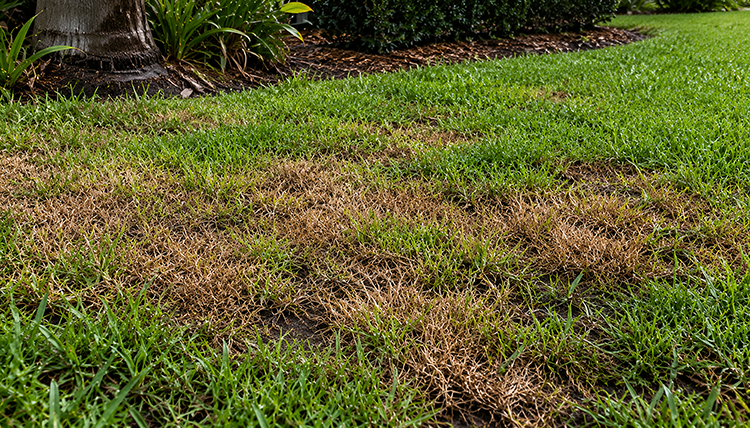
Dead spots rarely appear without reason. Every patch of dead or dying grass is connected to a specific stressor affecting the soil, the turf, or the root system beneath it. The most important step is identifying which cause is at work before applying any treatment.
Here are the most common culprits we see in Palm City lawns:
Pest Damage
Chinch bugs are one of the most destructive lawn pests in Florida. They feed on grass by extracting moisture and injecting a toxin that prevents the grass from absorbing water. The result looks like drought stress, which is why chinch bug damage is often misdiagnosed. Mole crickets are another common pest in this region, tunneling through the root zone and severing grass roots from below.
Signs of pest damage include:
- Irregular brown patches that expand rapidly during dry spells
- Grass that pulls up easily from the soil (root damage)
- Visible insects at the perimeter of the damaged zone
- Patches that do not respond to increased watering
Fungal Disease
Florida’s heat and humidity create ideal conditions for fungal diseases like brown patch, dollar spot, and gray leaf spot. These diseases spread through the thatch layer and attack grass blades or root systems, depending on the pathogen. Overwatering, poor air circulation, and watering in the evening are among the biggest contributors to fungal outbreaks.
Pet Damage
Pet urine contains nitrogen compounds in concentrations high enough to chemically burn grass. These spots typically appear as small, circular dead zones, sometimes with a ring of darker, greener grass around the perimeter. That green ring occurs because the outer edge receives a diluted dose of nitrogen, which actually fertilizes rather than burns.
Poor Irrigation Coverage
A sprinkler system with misaligned heads, clogged nozzles, or insufficient pressure will leave areas of the lawn consistently underwatered. Over time, those dry zones turn brown and begin to thin out. In Palm City’s summer heat, even a few days without adequate irrigation coverage can cause visible damage to turf.
Soil Compaction
Compacted soil prevents air, water, and nutrients from reaching the grass roots. Heavy foot traffic, repeated vehicle movement across lawn areas, and naturally dense Florida soils all contribute to compaction over time. A national survey of homeowners found that 25 percent identify compacted soil as an active hindrance to their lawn’s health, making it one of the top five most commonly reported lawn problems across the country. Grass growing in compacted soil becomes shallow-rooted, weak, and far more vulnerable to drought and disease.
Nutrient Deficiencies
Florida soils are often naturally low in iron, nitrogen, and potassium. When turf does not receive proper fertilization, it loses its density and color. Pale yellow patches or overall thinning can be an early indicator that the lawn is starved for essential nutrients. In our region, a lawn without a structured fertilization program will rarely maintain premium health on its own.
What Are the Early Warning Signs to Watch For
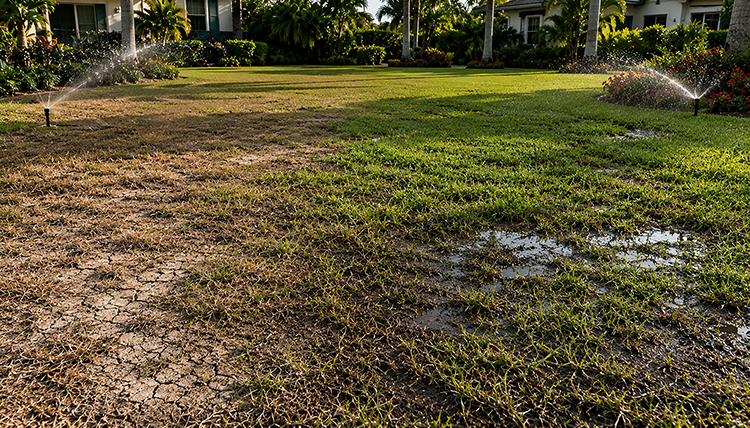
Catching a problem early makes treatment significantly easier and less costly. The challenge is that many lawn issues look similar in their early stages, which is why experienced observation matters.
Watch for these early indicators:
- Irregular color changes: Grass shifting from vibrant green to pale yellow, tan, or gray often signals stress before full die-off occurs.
- Texture changes: Grass blades that appear wilted, matted, or unusually thin in certain zones deserve closer attention.
- Circular or ring-shaped patterns: Round dead patches frequently point to fungal disease or pet damage rather than irrigation failure.
- Expanding edges: A dead zone with actively dying grass at its border suggests a spreading problem like fungus or pests.
- Thatch buildup: A thick, spongy layer of dead organic matter at the soil surface can harbor disease and block water penetration.
One practical test we recommend is the tug test. Grab a handful of grass within the dead zone and pull gently. If the turf lifts away from the soil with little resistance, root damage from pests or disease is likely. If the roots hold firm, the problem may be above the soil level.
Why Do Dead Spots Keep Coming Back
This is one of the most common questions we hear from homeowners who have tried to treat dead patches on their own. They reseed or resod a damaged area, and within a season or two, the problem returns in the same spot. The reason is almost always the same: the underlying cause was never addressed.
Laying new sod over a compacted soil area without aerating first will produce the same weak turf within months. Applying fungicide without adjusting the irrigation schedule will result in recurring disease. Treating for pests without inspecting the surrounding zones will leave an untreated reservoir for reinfestation.
Sustainable lawn recovery requires matching the treatment to the diagnosis, not simply covering the damage with new grass.
How Does Professional Lawn Care Diagnose and Treat Dead Spots
A professional lawn care approach begins with a thorough property assessment before any treatment is applied. At Alpha Zeta Landscaping, our process for addressing dead spots typically follows this sequence:
1. Site Diagnosis
We inspect the affected areas carefully, examining soil condition, root health, thatch depth, irrigation coverage, and visible pest activity. We look at the pattern and shape of the damage, which provides strong clues about the cause.
2. Soil Evaluation
We assess soil composition, compaction level, and pH. Florida soils often have a naturally low pH, which can lock out nutrients even when fertilization is applied. Correcting pH is sometimes the most important step in restoring lawn health.
3. Tailored Treatment Plan
Based on our findings, we develop a targeted plan that may include:
- Targeted pest control applications for insect infestations
- Fungicide treatments combined with irrigation schedule adjustments for disease
- Core aeration and top dressing for compacted soils
- Irrigation head adjustment or system repair for coverage issues
- A structured fertilization program to address nutrient deficiencies
- Overseeding or selective resodding once the underlying problem is resolved
4. Ongoing Monitoring
Treating the damage once is not enough. We monitor treated areas across subsequent visits to confirm recovery and catch any recurrence early before it spreads again.
Lawn Care & Maintenance
Diagnosis First, Then the Right Treatment
Our lawn care programs follow this same approach, with regular visits to monitor recovery and catch problems early.
What Role Does Irrigation Play in Preventing Dead Spots
Irrigation is one of the most significant factors in lawn health, yet it is also one of the most commonly overlooked causes of dead spots. Both underwatering and overwatering create serious problems.
Underwatered zones become drought-stressed, shallow-rooted, and vulnerable to chinch bug activity. Overwatered zones develop thatch buildup, oxygen-deprived root systems, and ideal conditions for fungal disease.
In Palm City, the heavy rainfall months of summer can actually mask irrigation problems. When rain provides excess moisture, a system that is also running at full schedule may be overwatering. We regularly adjust irrigation programs seasonally to match actual evapotranspiration rates and prevent these imbalances.
A well-calibrated irrigation system with proper head placement, correct run times, and seasonal scheduling adjustments is one of the strongest defenses against recurring dead patches in a Florida lawn.
How Can Proper Fertilization Prevent Lawn Die-Off
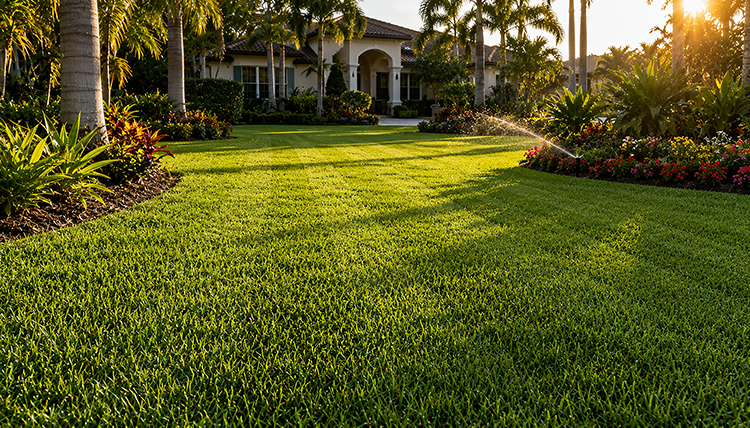
Fertilization is not simply about making grass green. A structured fertilization program maintains root density, improves drought resistance, speeds recovery from stress events, and strengthens the turf’s natural resistance to pests and disease.
Key principles of effective lawn fertilization include:
- Applying slow-release nitrogen sources that feed turf gradually without causing surge growth
- Supplementing with iron in sandy, low-pH soils where iron chlorosis is common
- Timing applications to avoid runoff during heavy rain periods
- Adjusting potassium levels to improve drought and cold tolerance heading into Florida’s drier months
Without a structured program, even a well-irrigated lawn in Palm City will struggle to maintain consistent health across all seasons.
Final Takeaway
- Dead spots are a symptom; the underlying cause must always be identified before treatment.
- Florida’s climate makes Palm City lawns particularly vulnerable to pests, fungal disease, and irrigation imbalance.
- Soil compaction and nutrient deficiencies are silent contributors that worsen over time without professional attention.
- Irrigation scheduling plays a critical role in both causing and preventing lawn die-off.
- A structured fertilization program builds turf resilience and reduces the frequency of stress-related damage.
- Recurring dead patches are almost always a sign that treatment was applied without proper diagnosis.
- Professional, ongoing maintenance is the most reliable path to a consistently healthy lawn.
Protecting Your Lawn Starts With the Right Partner
Dead spots in a lawn are not inevitable, and they are not permanent when addressed correctly. The key is understanding that lasting recovery requires more than patching the visible damage. It requires a systematic approach to soil health, pest management, irrigation calibration, and nutrient balance, all tailored to the specific conditions of your property and Palm City’s environment.
At Alpha Zeta Landscaping, we have spent nearly four decades developing that systematic approach across some of the finest properties on the Treasure Coast. Our lawn care and maintenance programs are built around the real conditions your turf faces every season, and our team brings the horticultural expertise to diagnose problems accurately and treat them effectively. If your lawn is showing signs of dead spots or declining health, we are here to help you restore it and keep it performing at its best throughout the year.