Key Takeaways
- Holes in your lawn can come from insects, burrowing animals, pets, poor soil, or drainage issues.
- Identifying the exact cause early prevents small damage from spreading across the entire lawn.
- Florida’s sandy, subtropical soil and heavy seasonal rainfall make Palm City lawns especially vulnerable.
- Ignoring holes can lead to root damage, grass death, and declining property value.
- Professional lawn care is the most reliable way to restore health and prevent repeat damage.
- A proactive maintenance plan protects your landscape investment all year long.
Finding holes in your lawn is one of those problems that tends to catch homeowners off guard. One morning, the grass looks fine. A few days later, there are small craters, scattered patches of disturbed soil, or irregular gaps spreading across what used to be a smooth, healthy turf.
For Palm City homeowners, this is not an uncommon situation. Florida’s warm climate, high humidity, sandy soils, and heavy summer rains create ideal conditions for the insects, animals, and soil problems that cause lawn holes to appear. And on a premium property, even minor lawn damage can have a visible impact on curb appeal.
The good news is that most causes are identifiable and treatable. Understanding what is actually happening beneath your turf is the first step toward fixing it properly and making sure it does not come back.
What Are the Most Common Causes of Holes in a Lawn
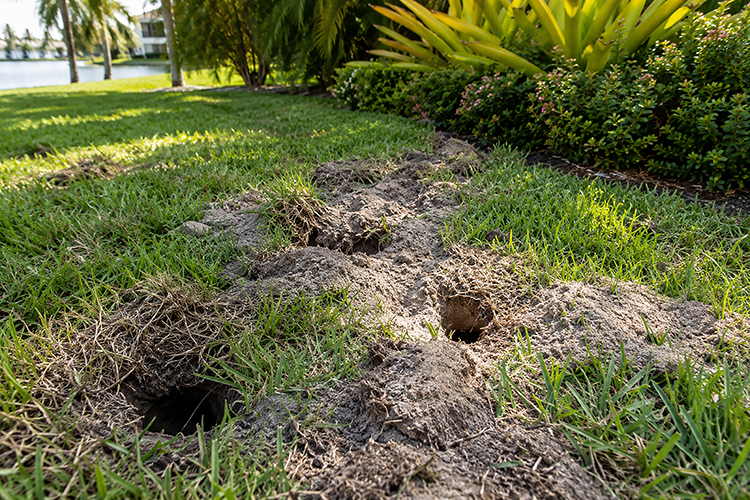
Holes in lawn areas rarely appear without a reason. Each type of hole tends to look different, appear in a different pattern, and point to a specific underlying cause. Here is a breakdown of what homeowners in Palm City most commonly encounter.
Insect Activity
Some of the most frequent culprits are insects that burrow into or beneath the soil. In Florida, fire ants are among the most recognizable, forming mound-like holes with disturbed soil around them. Ground beetles, mole crickets, and cicadas are also known to create small entry and exit holes as they move through the root zone.
Mole crickets in particular are a serious concern for Florida lawns. According to the University of Florida IFAS Extension, mole crickets are among the most destructive turf pests in the state, causing damage by tunneling through the soil and severing grass roots as they move. What starts as a few scattered holes can turn into large patches of dead or spongy turf within weeks.
Burrowing Rodents and Wildlife
Moles, voles, armadillos, and pocket gophers are all found in Florida and are all known to dig through lawns. Armadillos are especially common in the Palm City and Treasure Coast area. They root through soil searching for grubs and insects, leaving behind irregular, cone-shaped holes that can appear overnight.
Moles create raised tunneling ridges and surface holes as they dig, while voles tend to leave shallow runway-style trails and small entry holes near plant bases. These animals are persistent and often return to the same areas unless the underlying food source (usually grubs) is addressed.
Pet Digging
Dogs dig for a variety of reasons, including boredom, prey instinct, or the desire to cool down in hot weather. In South Florida’s summer heat, pets sometimes dig into shaded or moist areas of the lawn. Pet-caused holes tend to be larger, more irregular in shape, and concentrated in specific spots the pet favors.
While pet holes are less damaging to the root system than insect or rodent activity, they can still disrupt soil structure, tear grass roots, and create muddy low spots that collect water.
Poor Soil Conditions and Settling
Sandy Florida soils are prone to settling, compaction, and void formation. When underground organic matter decomposes, when soil erodes beneath the surface, or when tree roots break down over time, small sinkholes or irregular depressions can appear in the lawn. These are often mistaken for animal holes but have no clear entry or exit point.
Thatch buildup, heavy foot traffic, and repeated drought cycles can also contribute to soil inconsistency that leads to surface irregularities.
Drainage Problems
Palm City receives an average of over 55 inches of rainfall annually. When drainage is inadequate, water saturates the soil and erodes it from below. This can cause surface collapse, creating pockmarked or dimpled turf areas, especially in low-lying zones of the yard.
Poor drainage also weakens grass roots, making the turf more vulnerable to insect damage and root disease, which in turn increases the likelihood of holes forming or spreading.
What Warning Signs Should Homeowners Not Ignore
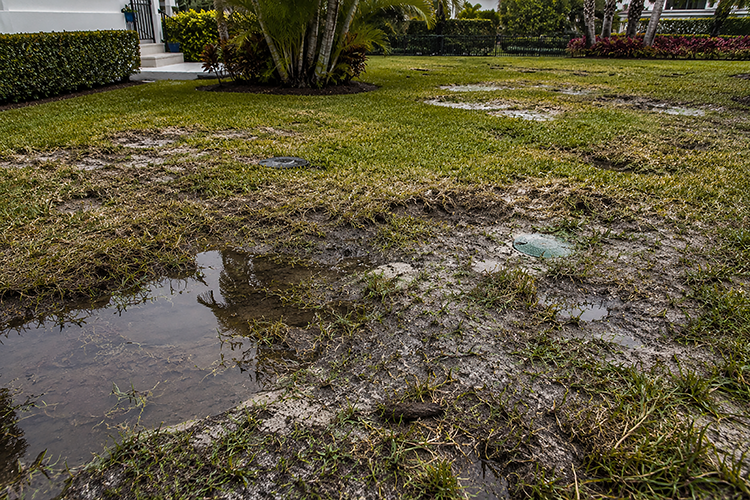
Some lawn holes are minor inconveniences. Others are early signals of a serious problem developing beneath the surface. Knowing the difference can save homeowners significant time, money, and frustration.
Watch for these warning signs:
- Multiple holes appearing in clusters rather than isolated spots often signal a pest infestation or an active burrowing animal.
- Spongy or soft turf when you walk across the lawn, which may indicate root damage from mole crickets or severe moisture saturation.
- Raised soil ridges or tunneling trails running in lines across the yard are a classic sign of mole or mole cricket activity.
- Grass pulling away from the soil easily when tugged, which means root damage is already advanced.
- Brown patches forming around hole sites, indicating that root systems in those areas are dying.
- Standing water forms near hole areas after rain, pointing to a drainage problem, making the damage worse.
- Holes appearing near irrigation heads may signal either root intrusion or water pressure erosion.
The sooner these signs are addressed, the less likely they are to spread. Florida’s warm
year-round climate means insects and animals remain active throughout most of the year, unlike northern states, where cold winters interrupt pest cycles naturally.
Seeing These Signs? Let’s Find the Real Cause
Clustered holes, spongy turf, and tunneling ridges are tricky to diagnose on your own. Our team can walk your lawn, pinpoint the source, and recommend the right fix.
How Do Florida’s Climate and Soil Make Lawns More Vulnerable
Palm City’s subtropical environment is beautiful, but it places unique stress on residential lawns. Understanding these local conditions helps explain why holes and lawn damage are more common here than in other parts of the country.
Florida’s sandy soils drain quickly during dry periods but can become waterlogged during the rainy season, which typically runs from June through September. This cycle of saturation and dry-out stresses the grass roots and creates instability in the upper soil layer. Loose, sandy soil is also easier for burrowing insects and animals to move through compared to denser soils found in other regions.
The warm temperatures that make Palm City so appealing also keep insect populations active for a longer portion of the year. Grubs, mole crickets, and fire ants are all more difficult to control in Florida than in cooler climates because there is no extended cold period to reduce their populations naturally.
High humidity encourages fungal and bacterial soil activity, which accelerates the decomposition of organic matter underground. This can create subtle void spaces beneath the turf surface that eventually collapse, producing depressions or holes.
For homeowners with premium properties, these environmental factors make professional, locally informed lawn care especially important.
How Can Proper Lawn Maintenance Prevent and Repair Holes
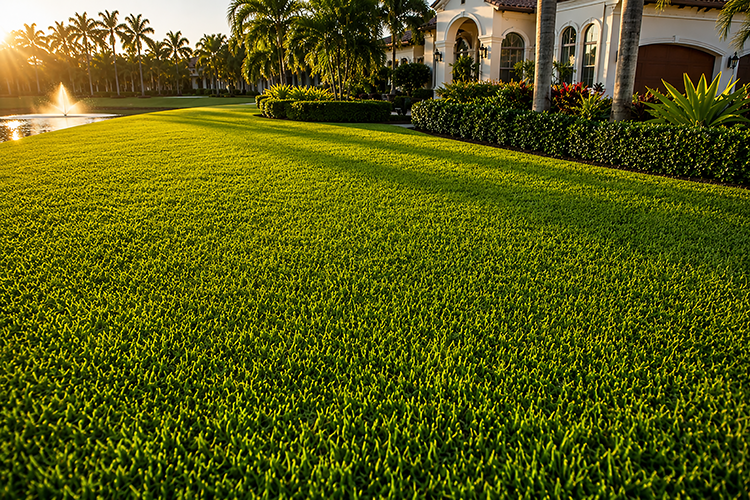
A well-maintained lawn is significantly more resilient against the conditions that lead to holes. Professional lawn care addresses the health of the grass, the condition of the soil, and the underlying causes of damage, rather than just patching over the surface.
Here is how a comprehensive lawn care approach helps:
- Regular soil aeration reduces compaction, improves root depth, and eliminates the weak soil conditions that burrowing insects prefer.
- Targeted pest control programs treat grub and mole cricket populations before they cause widespread root damage.
- Proper irrigation management keeps soil moisture consistent, reducing the extremes of saturation and drought that weaken turf and create conditions that burrowing animals seek.
- Thatch removal and dethatching eliminate the dense mat of dead organic material that many lawn pests use for shelter and feeding.
- Overseeding and turf repair restore damaged areas after holes are filled and the underlying cause is addressed.
- Drainage improvements redirect excess water away from turf areas, preventing the erosion and soil saturation that accelerate hole formation.
Each of these steps works together to create a lawn environment that is less hospitable to pests and animals and more capable of recovering from seasonal stress.
We often see Palm City homeowners attempt to fill holes with topsoil and reseed, only to watch the problem return weeks later because the root cause was never identified. Treating the symptom without addressing the source rarely produces lasting results.
What Should Homeowners Do When They Find Holes in Their Lawn
If you have noticed holes appearing on your property, a methodical approach helps identify the source before any treatment is applied.
Step 1: Observe the hole pattern and location. Are the holes clustered in one area or scattered across the lawn? Are they near irrigation lines, garden beds, or shaded zones? Patterns reveal a great deal about the source.
Step 2: Check the soil around the holes. Loose, freshly disturbed soil suggests an active burrowing animal. Compacted edges with no disturbance often indicate insect emergence. Wet, collapsing soil points to a drainage or settling issue.
Step 3: Look for secondary signs. Check for tunneling ridges, dying grass, spongy turf, or pest activity on nearby plants. These secondary clues narrow down the cause considerably.
Step 4: Consult a lawn care professional. Misidentifying the cause leads to wasted time and money on the wrong treatment. A professional with experience in Florida turf and pest behavior can diagnose the problem accurately and recommend the correct solution.
Step 5: Address the underlying cause first. Whether that means pest treatment, drainage correction, soil amendment, or wildlife deterrence, the root issue must be resolved before the holes are filled and the turf is repaired.
Final Takeaway
- Lawn holes are symptoms of a deeper issue; identifying the exact cause before treating is critical.
- Florida’s climate keeps insects and burrowing animals active most of the year, making Palm City lawns especially susceptible.
- Mole crickets, grubs, armadillos, and drainage failures are the most common culprits in this region.
- Spongy turf, dead patches near hole sites, and recurring clusters of holes are signals that should not be delayed.
- Professional pest management, drainage correction, and soil care produce far better long-term results than surface patching alone.
- A proactive maintenance plan is the most effective way to keep a premium lawn looking its best year-round.
Holes in a lawn rarely stay small. What starts as a handful of scattered openings can become widespread turf damage, root loss, and visible decline across a property that took years to build. For Palm City homeowners who have invested in premium landscapes, acting early and acting correctly makes all the difference.
The team at Alpha Zeta Landscaping brings nearly four decades of local expertise in Florida turf care, pest management, drainage solutions, and lawn restoration to help homeowners protect that investment. With a deep understanding of Palm City’s soil, climate, and seasonal conditions, we identify the real source of the problem and apply the right solution the first time, so your lawn stays healthy, beautiful, and resilient through every season.