The best backyard fence lighting ideas are post cap lights, uplights at the base of the fence, LED strips under the top rail, sconces at gates and seating areas, and string lights over entertaining spaces. Most yards look best with two of these layered together in warm white (2700K to 3000K). On the Treasure Coast, choose fixtures built to handle salt air, humidity and summer storms.
This guide covers each fence lighting type, how far apart to space fixtures, which lights suit wood, vinyl, aluminum and masonry fences, and when solar lights make sense. It also covers how fence lighting fits into a full landscape lighting plan for Palm City homes.
Why Does Backyard Fence Lighting Matter More Than You Think
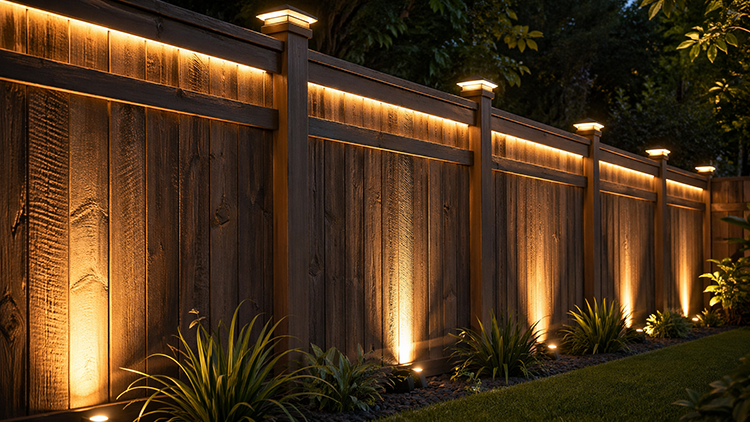
Most homeowners underestimate what fence lighting actually does for a property. It’s easy to think of it as decorative, a nice touch, nothing more. But the impact goes further.
For Palm City homeowners, there’s an additional reason fence lighting matters: you’re outdoors year-round. Florida’s climate means your backyard is an extension of your home in every season and it should look that way every night, not just during the day.
Good fence lighting also improves safety. It helps guests navigate your property after dark, deters unwanted foot traffic along the perimeter, and reduces tripping hazards near steps and grade changes.
What Are the Most Effective Types of Fence Lighting
Not all lighting works the same way on a fence. Choosing the right type depends on the fence material, the surrounding landscape, and what effect you want to create. Here’s a breakdown of the most effective options:
Post Cap Lights
Post cap lights sit on top of fence posts and cast a downward glow. They’re one of the most classic choices for residential fences and work beautifully on wood, vinyl, and composite fencing. They define the perimeter clearly and create a rhythmic visual pattern along the fence line.
LED Strip Lighting
LED strip lights installed beneath the top rail or along the base of a fence create a floating, architectural effect. This look is modern and dramatic. Ideal for contemporary outdoor living spaces or pool areas where you want a clean, resort-style aesthetic.
Residential LEDs use at least 75% less energy and last up to 25 times longer than incandescent bulbs, according to the U.S. Department of Energy
Ground-Level Uplights
Uplights placed at the base of a fence and angled upward cast dramatic washes of light across the fence surface. This technique adds texture, shadow, and depth especially effective on wood fences, masonry walls, or fences with interesting architectural detailing.
Wall-Mounted Sconces and Lanterns
Sconces mounted directly onto fence panels or posts provide functional, decorative light. They’re ideal around gate entries, outdoor kitchens, and seating areas where you need reliable illumination combined with a polished look.
String Lights
Draped along the top of a fence or stretched between posts, string lights create an immediate sense of warmth and intimacy. They’re particularly effective in entertaining zones, transforming a backyard into an outdoor room with a relaxed, welcoming atmosphere.
Recessed Step and Rail Lights
For fences near pool decks, raised patios, or terraced gardens, recessed lights built into fence rails or along the base provide subtle, low-glare illumination that enhances safety without overwhelming the space.
What Lighting Color Temperature Works Best for Outdoor Fences
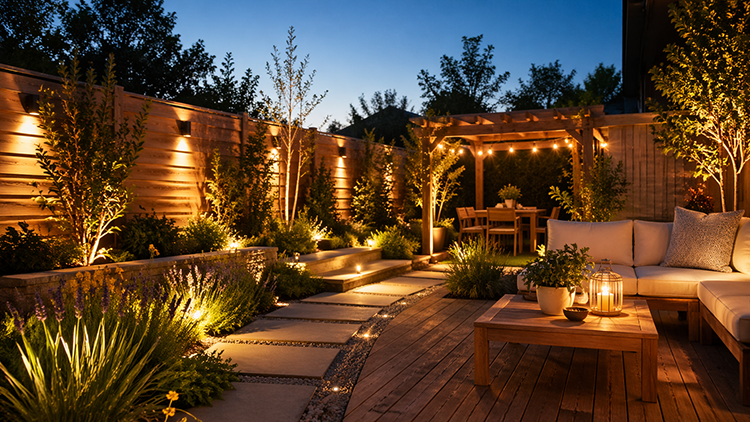
Color temperature measured in Kelvins (K) determines whether your lighting looks warm and welcoming or cool and clinical.
For backyard fence lighting, warm white (2700K to 3000K) is the recommended range for most residential applications. This range:
- Creates a welcoming, organic glow that complements natural landscape elements
- Makes plant material look vibrant rather than washed out
- Produces an upscale ambiance consistent with premium outdoor spaces
- Blends well with candlelight, fire features, and indoor lighting visible through windows
Cooler temperatures (4000K and above) can work in very modern, minimalist settings but they require careful integration so the overall property doesn’t feel sterile or institutional.
Landscape Lighting
Warm, Balanced Light Designed for Your Property
We handle fixture selection, color temperature and placement, using materials chosen to perform through Florida’s coastal climate.
How Far Apart Should Fence Lights Be?
Most fence lights are placed on every second post. On most fences, that works out to one light every 12 to 20 feet, depending on how far apart the posts are. Use every post when you want an even glow along the whole fence, and wider gaps when you only want soft pools of light.
A few spacing tips that apply to almost any fence:
- Match the fixture to the gap: Brighter fixtures with a wider beam can sit farther apart. Small post caps and deck lights need closer spacing to avoid dark gaps.
- Keep it even: Measure and mark every fixture before you mount anything. Uneven spacing is the first thing people notice at night.
- Light what’s in front of the fence too: Aiming a small spotlight at a palm or shrub in front of the fence throws soft shadows onto the boards, which often looks better than lighting the fence itself.
- Plan the wiring for long runs: On a long fence, low-voltage lights at the far end can come out dimmer than the ones near the transformer. Splitting the fence into sections, each fed by its own cable, keeps every light at the same brightness.
Solar or Low-Voltage Fence Lights: Which Should You Choose?
Solar fence lights are cheap and need no wiring, but they are dimmer and need a full day of direct sun, which fences, trees and summer clouds often block. Low-voltage (12-volt) LED lights run from a transformer, stay the same brightness every night and can run on timers or smart controls. For a fence you want lit every night, low voltage is the more dependable choice.
| Feature | Solar | Low-voltage (12V) LED | Plug-in string lights |
|---|---|---|---|
| Wiring | None | Cable from a transformer | Outdoor outlet |
| Brightness | Low, fades late at night | Steady all night | Low, decorative |
| Shade or cloudy weeks | Weak or off | Not affected | Not affected |
| Controls | Built-in dusk sensor | Timers, photocells, smart controls | Plug timer |
| Best for | Short fences in full sun | Permanent fence and landscape lighting | Patios and party areas |
Can you install fence lighting yourself?
Yes, for solar and plug-in string lights. Small low-voltage kits are also DIY-friendly. Long fence runs are harder, because the cable size and layout decide whether the last light is as bright as the first. Any new 120-volt wiring or outlet should go to a licensed electrician.
How Does Fence Lighting Integrate with Full Landscape Design
Fence lighting works best as one layer of a full landscape lighting plan, not as a stand-alone project.
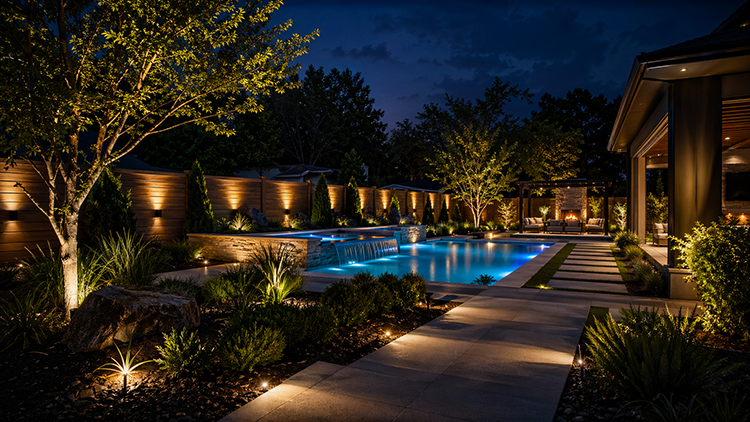
A cohesive landscape lighting design treats the fence as one layer within a larger illuminated environment. It coordinates:
- Path and walkway lighting that leads the eye through the property
- Accent uplighting on specimen trees and architectural plantings
- Pool and water feature lighting that reflects and interacts with fence perimeter lights
- Outdoor living space lighting for seating areas, kitchens, and dining zones
- Security lighting that integrates with the aesthetic plan rather than conflicting with it
When all of these elements are designed together, the backyard at night becomes as intentional and beautiful as it is during the day. The lights work together instead of competing. Every fixture placement has a purpose, and the overall effect is unified rather than piecemeal.
This is the difference between buying a few lights online and having a professional lighting design created for your specific property.
Why Professional Landscape Lighting Design Produces Better Results
Many homeowners start with a DIY approach to fence lighting and end up frustrated either with the aesthetic results, the installation challenges, or the durability issues that emerge after a season or two in Florida’s climate.
Professional landscape lighting design isn’t just about installation skill. It’s about design vision. A skilled lighting professional evaluates your fence, your plantings, your outdoor living areas, and your home’s architecture as a whole and creates a plan where everything works together.
Homeowners looking for that level of craft and cohesion often turn to experienced local professionals who understand both the design principles and the environmental realities of coastal South Florida. The team at Alpha Zeta Landscaping has nearly four decades of experience designing and installing landscape lighting systems for premium Palm City properties, building plans that are tailored to each homeowner’s vision and engineered to perform through Florida’s demanding climate year after year.
Final Thoughts: Your Fence Is the Frame Light It As It Matters
A beautiful backyard shouldn’t disappear at sunset. Your fence defines the edges of your outdoor world, and the right lighting makes that world visible, welcoming, and genuinely impressive after dark.
The ideas in this guide, from post cap lights and LED strips to uplighting and sconces, are all proven approaches. But the difference between a decent result and a truly stunning one comes down to how well those ideas are tailored to your specific property, your landscape, and the demands of Florida’s coastal climate.
For Palm City homeowners who want a backyard that looks exceptional day and night, Alpha Zeta Landscaping brings nearly four decades of local expertise to every lighting project. From the first design consultation to the final nighttime walkthrough, every fixture placement is intentional, every material is chosen for longevity, and every plan is built around your vision because a premium property deserves lighting that truly rises to meet it.
Fence Lighting FAQs
What color light is best for fence lighting?
Warm white between 2700K and 3000K suits most backyards. It makes plants and wood look natural and blends with pool, patio and indoor lighting. Cooler light (4000K and above) can work on very modern designs but often looks harsh along a fence.
Will fence lights bother my neighbors?
They shouldn’t if you aim fixtures down or toward your own yard, use shielded fixtures and keep brightness low. Many Treasure Coast communities also have HOA rules for exterior lighting, so check yours before you buy fixtures.
How long does it take to install fence lighting?
Alpha Zeta completes most residential landscape lighting installations in Palm City within 1 to 3 days. Larger properties or more detailed designs can take longer.