Key Takeaways
- Palm City homeowners are moving toward two clear pergola styles: clean-lined contemporary builds and substantial timber pavilions.
- Material choice (cedar, ipe, or marine-grade hardware) matters more here than in most parts of the country because of our coastal climate.
- Comfort features like retractable canopies, integrated lighting, and ceiling fans are what turn a pergola into a space you actually live in.
- A thoughtfully designed pergola can be one of the more valuable outdoor investments on a premium property.
A pergola is often the first thing a homeowner points to when they describe their dream backyard. It is not just shade over a patio; done well, it becomes the architectural anchor of the entire outdoor space, framing the pool, the kitchen, or the view of the yard.
At Alpha Zeta Landscaping, we’ve spent nearly four decades designing and building outdoor living spaces across Palm City and the Treasure Coast. Pergolas are one of the most requested features we hear from homeowners who want their backyard to feel as finished and as personal as the inside of their home.
This guide walks through the style choices, materials, and comfort features that matter most for a pergola built specifically for Palm City’s coastal environment, along with what to think about before you start the design process.
What pergola style fits Palm City’s upscale outdoor spaces?
There isn’t one “right” pergola look. The best choice depends on your home’s architecture, your lot, and how you plan to use the space. In our experience, most Palm City homeowners land on one of two directions.
- Clean-lined contemporary pergolas: Slim posts, straight beams, and minimal ornamentation. These pair well with modern or transitional homes and tend to feel lighter and more open.
- Substantial timber pavilions: Heavier posts, deeper beams, and a more grounded, permanent presence. These suit larger properties and homes with a more traditional or coastal architectural style.
Both approaches can frame a view, define a gathering space, and provide shade without closing off the yard. The right one usually becomes obvious once we walk the property and talk through how the space will actually be used.
Which materials hold up best in Palm City’s coastal climate?
Salt air, humidity, and intense sun are hard on outdoor structures, so material selection is not a place to cut corners. Cedar and ipe are two of the most reliable choices we work with, and marine-grade hardware protects every connection point from corrosion.
The USDA Forest Products Laboratory’s Wood Handbook, a long-standing federal reference on wood performance, groups species by their natural resistance to decay. Denser hardwoods and cedar consistently rank among the more durable categories for above-ground outdoor use, which is part of why they remain popular choices for coastal construction.
That said, no wood is maintenance-free in Florida. A properly finished, well-fastened pergola built with the right species will simply need far less attention over time than one built with generic lumber and standard hardware.
Build a Pergola That Stands Up to Salt Air
We’ve been building on the Treasure Coast since 1985, and we’ll help you pick the wood, finish and hardware that suit your specific location.
What comfort features make a pergola usable all year in Florida?
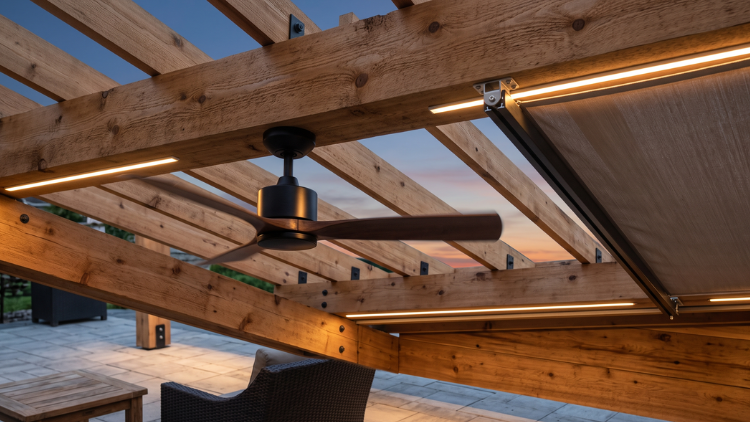
A beautiful pergola that sits empty most of the year isn’t doing its job. The features that make the biggest difference in comfort are usually the ones added at the design stage, not bolted on later.
- Retractable canopies: Give you control over sun and light rain without losing the open feel of the structure.
- Integrated lighting: Extends usable hours into the evening and adds ambiance for entertaining.
- Ceiling fans: Keep air moving underneath the structure, which matters a great deal during Florida’s warmer, more humid months.
These additions work best when the electrical, structural, and drainage planning happen together from the start, rather than being added piece by piece.
Does a custom pergola add value to your Palm City home?
Outdoor living upgrades have become a meaningful part of how buyers evaluate a property, especially in a market like ours where outdoor time is part of daily life for much of the year.
According to the National Association of Realtors, homeowners who complete outdoor remodeling projects report a real boost in day-to-day satisfaction with their homes, with a majority saying they have a greater desire to spend time at home afterward. That lines up with what we hear directly from Palm City clients: a well-placed pergola tends to become one of the most-used spaces on the property, not just the most-photographed one.
Value isn’t only financial, either. A pergola that fits the home and the way a family actually lives tends to get used every week, which is its own kind of return.
Key factors to consider before building a custom pergola
Before committing to a design, it helps to think through a few practical questions with your design-build team.
- Placement: Where does the sun sit at different times of day, and what view should the pergola frame?
- Size and scale: Should the structure feel like an intimate nook or a full outdoor room?
- Integration: Will it connect to an existing patio, pool deck, or outdoor kitchen?
- Permitting: Permanent outdoor structures in Palm City are subject to Martin County’s permitting requirements, and timelines vary by project scope.
- Long-term care: What finish schedule and hardware inspection routine will keep the structure looking its best?
Final Takeaway
- Choose a pergola style (contemporary or timber pavilion) based on your home’s architecture, not trend alone.
- Prioritize coastal-appropriate materials and marine-grade hardware over lower-cost generic lumber.
- Build comfort features into the design from day one rather than adding them later.
- Think of a pergola as a long-term investment in how your family uses the property, not just a visual upgrade.
Closing Thoughts
A pergola done right earns its place in daily life, not just in photos. It takes the right style, the right materials for our coastal climate, and comfort features planned in from the start.
At Alpha Zeta Landscaping, this is the kind of project we’ve built our reputation on for nearly 40 years across Palm City and the Treasure Coast. If you’re considering a custom pergola for your backyard, we’d welcome the chance to walk your property and talk through a design that fits both your home and the way you live outdoors.
FAQs
What’s the difference between a pergola and a pavilion?
A pergola typically has an open or partially open roof structure that filters light, while a pavilion usually has a solid roof for full shade and weather coverage. Both can be built with similar materials, but they serve slightly different purposes in a backyard layout.
Can a pergola be added to an existing patio or pool area?
Yes, and it’s one of the more common requests we get. A pergola can be designed to connect to existing hardscape and pool structures as long as footings and drainage are planned around what’s already in place.
Do I need a permit to build a pergola in Palm City?
Permanent outdoor structures in Palm City may require permitting through Martin County, with requirements varying based on factors such as size, design, and attachment to the home. Your design-build team can confirm the requirements and handle the permitting process as part of the project timeline.
How long does it typically take to design and build a custom pergola?
Design usually takes a few weeks, with permitting and construction adding additional time depending on project complexity and current permitting schedules. A single-feature pergola project is generally faster than a full outdoor living build-out.