Key Takeaways
- Palm City’s coastal exposure changes real design decisions, not just style choices, from footing depth to fastener type.
- Layout should be planned around wind direction and sun path before any structure or material gets chosen.
- Wind-rated construction isn’t optional here; it’s what keeps a pergola or pavilion standing after storm season.
- Material selection matters more near the coast than almost anywhere else in Florida.
- A design built specifically for this environment protects both your investment and your enjoyment of it for years, not just one season.
Palm City sits close enough to the coast that outdoor living spaces here face a different set of demands than a patio built inland. Salt-laden air, high humidity, intense sun, and hurricane-season winds all interact with structures and materials in ways that shape how well a space performs over time.
At Alpha Zeta Landscaping, we’ve spent nearly four decades designing outdoor living spaces for homeowners across Palm City and the Treasure Coast. The projects that hold up best all share one thing in common: they were engineered around this exact coastal environment from the first planning conversation, not patched up to survive it later.
This article walks through the specific design decisions, layout considerations, and material choices that separate an outdoor living space built to last in Palm City from one that needs repairs within a few seasons.
What makes outdoor living space design different in Palm City’s coastal climate?
Palm City sits within Martin County’s coastal influence zone, which means the design process has to account for more than how a space looks. Several environmental factors act on outdoor structures at once, often in ways homeowners don’t notice until something starts to fail.
The main factors that shape design decisions here include:
- Salt aerosol carried inland by coastal winds, which accelerates corrosion on unprotected metal
- Year-round humidity, which affects wood, fabric, and finish selection
- Intense UV exposure, which breaks down lower-grade materials faster than in northern climates
- Seasonal heavy rainfall, which requires deliberate drainage planning around any hardscape
- Hurricane-season wind loads, which affect how any roofed or vertical structure must be built
Each of these factors influences a different part of the design, from the footing below a pergola to the finish on an outdoor kitchen countertop.
Key layout factors for a coastal Palm City backyard
Layout should be settled before materials or structures are chosen, not after. A well-placed outdoor kitchen or fire feature in the wrong spot on the property can fight against wind, sun, and drainage for the life of the space.
A few factors we weigh early in the layout process:
- Prevailing wind direction: Southeast breezes are common in Palm City, and structures placed to work with them, rather than against them, need less reinforcement.
- Afternoon sun exposure: Western-facing seating areas often need more shade coverage to stay usable in summer.
- Site elevation and grading: Low spots collect water fast during Florida’s rainy season, and that has to be corrected before construction, not after.
- Sightlines and privacy: Palm City’s larger lots often allow for layouts that frame a pool or water view while still shielding gathering areas from neighboring properties.
Getting this right early avoids costly redesigns once footings and utilities are already in the ground.
What wind-rated structural choices matter for pergolas, pavilions, and shade structures?
Wind design requirements in Palm City are based on the current Florida Building Code and ASCE 7-22, with the applicable ultimate design wind speed determined by the property’s location, risk category, and other site-specific factors. That requirement affects footing design, post spacing, connector hardware, roof design, and other structural details.
Structural decisions that matter most for wind performance include:
- Footing depth and concrete volume sized to the specific structure’s height and roof area
- Wind-rated connector hardware specified according to Florida’s structural code requirements
- Post spacing tight enough to meet code, even if it means adjusting the original design
- Roof design that accounts for wind uplift rather than standard inland construction
Skipping any one of these doesn’t just risk storm damage. It can also mean the structure never should have received a permit in the first place.
Which materials hold up best against salt air and humidity?
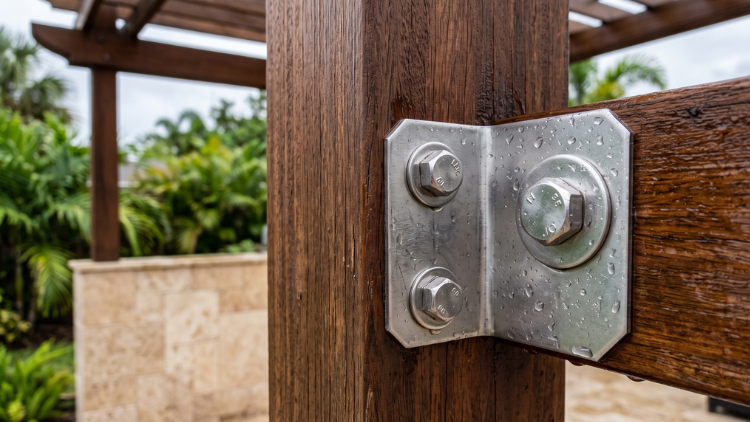
Material choice is where most DIY outdoor living projects fail first, usually within a year or two of installation. Standard hardware store metal fasteners and finishes are made for general use, not for a property sitting in a coastal salt zone.
Materials that consistently perform well in this environment include:
- Marine-grade stainless hardware for any structural fastener or connector
- Naturally decay-resistant woods like ipe or properly sealed cedar
- Pressure-treated structural components rated for coastal exposure
- Sealed, weather-resistant cabinetry and countertop materials for outdoor kitchens
The right material choice up front costs more initially but avoids the repeated replacement cycle that comes with using indoor-grade products outdoors.
Why does a professionally engineered design outperform a DIY approach?
Outdoor living projects carry real value when they’re built correctly. According to the National Association of Realtors’ Remodeling Impact Report on outdoor features, homeowners recover a meaningful share of their investment on projects like new patios and outdoor kitchens when the work is well executed. That value depends entirely on the structure and materials actually holding up over time.
A DIY or unengineered approach tends to run into the same problems repeatedly:
- Footings sized by guesswork instead of wind load calculations
- Missed Martin County permitting requirements applicable to properties in Palm City
- Drainage grading that looks fine on day one but pools water within a year
- Material substitutions made to save money that shorten the structure’s lifespan
A professionally designed space accounts for all of this from the start, which is why it holds its value and its function far longer than a project built without local, climate-specific expertise.
Final Takeaway
- The coastline’s effect on materials reaches further inland than most homeowners expect.
- Layout decisions made before construction save money and headaches later.
- Wind-rated engineering isn’t a premium add-on here; it’s a baseline requirement for anything built to last.
- Value only holds up if the underlying construction does, which is why execution matters as much as design.
Closing Thoughts
An outdoor living space built for Palm City has to work with the coastal climate, not just survive it. The layout, the structural engineering, and the materials all need to be chosen with this exact environment in mind from the first sketch.
At Alpha Zeta Landscaping, that’s the approach we bring to every project, combining nearly four decades of local experience with a design and construction process built specifically for Palm City’s coastal conditions, to create a space designed for long-term enjoyment.
FAQs
Does an outdoor living space in Palm City need to meet hurricane wind codes?
Yes, any roofed or vertical structure like a pergola, pavilion, or freestanding wall falls under Florida’s wind-resistance requirements. The exact engineering depends on the structure’s height, footprint, and location on the property.
Can I use standard stainless steel hardware near the coast?
Standard hardware can corrode faster than expected in salt air, even away from direct waterfront. Marine-grade stainless is a more reliable choice for structural connectors and fasteners in this climate.
How far from the water does material selection need to change?
Coastal atmospheric effects reach well beyond the immediate waterfront, so most Palm City properties benefit from coastal-grade material choices, not just homes directly on a canal or the Intracoastal.