Key Takeaways
- An irrigation system is a network of pipes, valves, and sprinkler heads designed to deliver water precisely where your landscape needs it automatically.
- Florida’s unpredictable rainfall makes irrigation systems especially important for protecting your landscape investment in Palm City.
- Modern systems include smart controllers that adjust watering schedules based on real-time weather conditions, saving water and money.
- A properly zoned irrigation system delivers different amounts of water to different areas – lawns, garden beds, and trees all have different needs.
- Professional installation ensures your system is engineered for your property’s specific soil, sun exposure, and plant types.
If you own a home in Palm City, Florida, you already know how unpredictable the weather can be. One week brings heavy afternoon storms. The next few weeks of dry heat. Without a reliable way to manage water delivery, even the most beautifully designed landscape can suffer.
This is where an irrigation system becomes one of the most valuable investments you can make in your property. It takes the guesswork out of watering, protects your plants through every season, and allows you to maintain a pristine landscape without standing in the yard with a garden hose.
If you are planning a new landscape or trying to improve how your current yard is maintained, understanding what an irrigation system is and how it works is a great place to start.
What exactly is an irrigation system
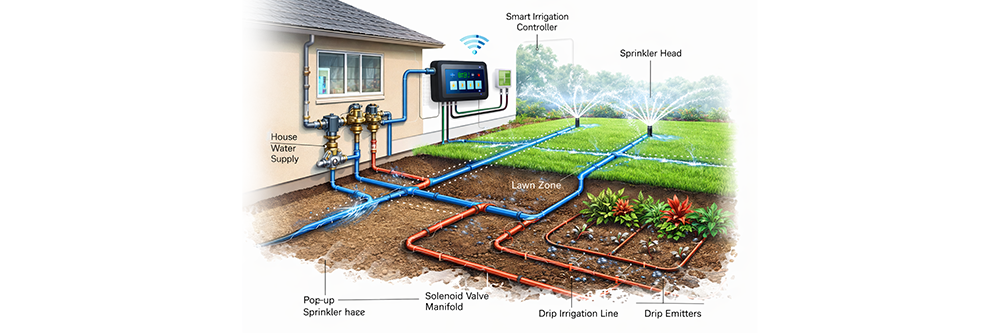
At its most basic level, an irrigation system is a network of underground pipes, valves, sprinkler heads, and controllers that work together to deliver water to your landscape on a set schedule. Rather than relying on manual watering or waiting for rain, an irrigation system automates the process and ensures every area of your yard receives the right amount of moisture.
A well-designed system is divided into zones. Each zone covers a specific area of your property – your lawn, flower beds, trees, or shrubs and can be programmed independently. This matters because different plants have different water requirements. A dense turf lawn needs more frequent watering than a native plant bed, for example.
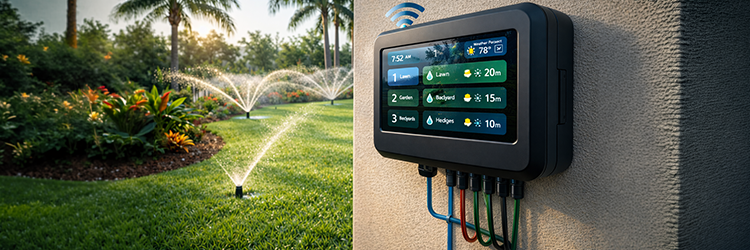
Modern systems also include smart controllers that can read weather data and adjust automatically. If rain is forecast or the soil is already saturated, the controller can skip a scheduled cycle. Saving water and preventing overwatering.
What are the main components of an irrigation system
Understanding how an irrigation system is built helps you appreciate why professional installation matters. These systems are more complex than most homeowners realize, and each component plays an important role in the system’s overall performance.
- Water Source and Main Line: Water is drawn from your home’s main supply and fed through a primary underground pipe that runs throughout the property. Proper pressure regulation starts here.
- Control Valves: Valves open and close to direct water to each zone on schedule. They are managed electronically by the system’s controller.
- Sprinkler Heads and Rotors: These are installed throughout your yard at precise locations to distribute water evenly. Pop-up heads retract below ground when not in use, keeping your landscape clean and uncluttered.
- Drip Irrigation Lines: Used for garden beds and plant borders, drip lines deliver water directly to root zones at a slow, steady rate. Reducing evaporation and overspray.
- Smart Controller: The brain of the system. It manages watering schedules, monitors weather conditions, and allows you to adjust settings from a smartphone or panel.
- Rain Sensors and Moisture Sensors: These devices detect rainfall or soil saturation and automatically pause the system to prevent unnecessary watering.
- Backflow Prevention Device: A required safety component that protects your home’s drinking water supply from contamination.
Every one of these components must be properly sized, positioned, and calibrated to work together. A single miscalculated zone or an undersized mainline can compromise the entire system’s performance.
Why does an irrigation system matter specifically in Palm City, Florida
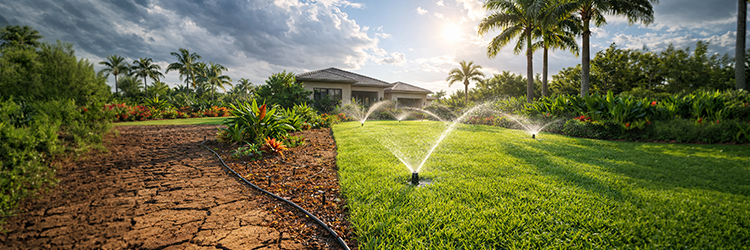
Florida’s climate creates a unique challenge for homeowners. Palm City experiences its wet season roughly from May through October, with the highest rainfall typically occurring during these months, followed by a drier, cooler period from November through April. During the dry months, lawns and gardens can deteriorate quickly without a consistent water source.
But the wet season brings its own complications. Heavy afternoon downpours can saturate the ground in a short period, meaning your system needs to be smart enough to recognize when additional watering is unnecessary. Overwatering in Florida’s humid climate is just as damaging as underwatering, as it promotes fungal growth, encourages shallow root systems, and wastes a significant amount of water.
The coastal environment also means soil types, salt exposure, and sun intensity vary from one Palm City property to the next. What works for a shaded garden in one yard may perform poorly in a sun-drenched lawn just down the street. This is why local expertise matters so much in system design.
What types of irrigation systems are used in residential landscapes
Not every home needs the same setup. The right system depends on your property’s size, layout, plant types, and goals. Here are the most common approaches used in residential landscape irrigation.
In-Ground Sprinkler Systems
The most widely used option for residential lawns. Underground pipes connect to pop-up sprinkler heads that distribute water across the turf in a wide, even pattern. These systems are customizable for coverage area and spray radius, making them ideal for medium to large lawns.
Drip Irrigation Systems
Drip systems deliver water slowly and directly to the root zone of plants through small emitters placed along flexible tubing. They are exceptionally water-efficient. They are best suited for garden beds, shrubs, and trees.
Rotor Systems
Rotary heads move in a slow arc to distribute water across a wider area than fixed spray heads. They are particularly effective for large open lawn areas and deliver water at a slower application rate, giving the soil more time to absorb moisture and reducing runoff.
Smart or Wi-Fi Enabled Systems
These systems connect to weather data in real time and adjust watering schedules automatically. EPA WaterSense-certified smart controllers can reduce water consumption by up to 30% compared to conventional timer-based systems. For upscale Palm City properties, smart controllers are increasingly the standard.
How does a professional irrigation system protect your property’s value
For homeowners in Palm City, a premium landscape is more than a visual pleasure; it is a measurable asset. Studies have shown that attractive, well-maintained landscaping can increase property value by as much as 10 to 15%. But that value only holds if the landscape stays healthy. A dying lawn or stressed trees can quickly reverse that gain.
An irrigation system protects that investment by maintaining consistent moisture levels throughout the year. Plants establish stronger root systems when they receive regular, measured water. Trees and shrubs take years to mature. Losing them to drought stress or improper watering is a setback that cannot be quickly undone.
Beyond plant health, a professionally designed system also reduces the time you spend maintaining your yard. You will not need to monitor rainfall, move hoses, or worry about whether your lawn was watered while you were traveling. The system handles it reliably and efficiently.
We often see homeowners who waited too long to install a proper system dealing with patchy turf, stressed plantings, and uneven growth that requires significant effort to correct. The right irrigation infrastructure, installed from the start, avoids that cycle entirely.
What should homeowners consider before installing an irrigation system
Every property is different, and a system designed for one yard may not perform well for another. Before moving forward with installation, there are several factors worth thinking through carefully.
- Soil type and drainage: Sandy soils drain quickly and may require more frequent watering cycles. Clay or loam soils retain moisture longer. Your irrigation schedule must match your soil’s behavior.
- Sun and shade patterns: Areas receiving full sun all day need more water than shaded garden beds. A properly zoned system accounts for these differences across your property.
- Plant variety: Lawn grass, tropical plants, native species, and trees all have different hydration requirements. Mixed plantings in the same zone can lead to either overwatering or underwatering.
- Water pressure and flow rate: The system must be engineered to work with your home’s existing water pressure. Zones with too many heads or pipes that are too small will underperform.
- Local water regulations: Martin County and surrounding areas have specific irrigation schedules and restrictions in place. A professionally installed system will be designed to comply with these rules from day one.
- Future landscaping plans: If you plan to expand planting areas, add features, or redesign sections of your yard, it is worth incorporating that into the system’s initial design so zones can be added without a full reinstall.
Final Takeaway
- An irrigation system is not just a convenience in Florida’s climate. It is essential infrastructure for any landscape you want to keep healthy year-round.
- Zones, smart controllers, and proper component sizing are what separate a high-performing system from one that wastes water or delivers inconsistent results.
- Florida’s alternating wet and dry seasons require a system intelligent enough to respond to changing conditions automatically.
- Professional installation ensures your system is calibrated to your specific property, not a one-size-fits-all template.
- The long-term return on a quality irrigation system includes stronger plant health, lower water bills, and preserved property value.
- Compliance with local water regulations is built into a professionally designed system from the start, avoiding fines and waste.
For Palm City homeowners who have invested in a premium property, irrigation is one of the most practical ways to protect the surrounding area. The difference between a landscape that thrives and one that struggles through Florida’s dry season often comes down to whether water is being delivered consistently, efficiently, and intelligently.
At Alpha Zeta Landscaping, we have spent nearly four decades designing and installing irrigation systems across Palm City and the Treasure Coast. We understand the local soils, the seasonal patterns, and the specific demands that coastal Florida places on a landscape. Every system we install is engineered from the ground up for the property it serves.
If you are ready to give your landscape the water management it deserves, the team at Alpha Zeta Landscaping is here to help you design a solution that performs beautifully for years to come.