Key Takeaways
- Drip irrigation is the most water-efficient method available, reaching up to 90% efficiency.
- Spray, rotor, and drip systems each serve different zones; the right design uses all three strategically.
- Drip irrigation cuts water use by 30–50% compared to conventional spray methods.
- Palm City’s sandy soils, high evaporation, and water restrictions make drip irrigation especially valuable.
- Professional design and proper hydrozoning are what separate a high-performing system from one that wastes water and underdelivers.
If you are a homeowner in Palm City with a premium landscape, how you water your property is just as important as how it was designed. An inefficient irrigation system can waste hundreds of gallons every month, quietly inflate your water bill, and leave your plants struggling through Florida’s dry season even while the system runs on schedule.
The question most homeowners eventually ask is straightforward: which irrigation method is actually the most efficient? The short answer is drip irrigation. But the fuller answer, the one that leads to real savings and a healthier landscape, is about understanding when and where each method belongs, and how a properly designed system brings it all together.
This article walks you through each irrigation method quickly, then goes deep into why drip irrigation leads the field and what it takes to get it right in Palm City’s specific environment.
A Quick Look at the Main Irrigation Methods
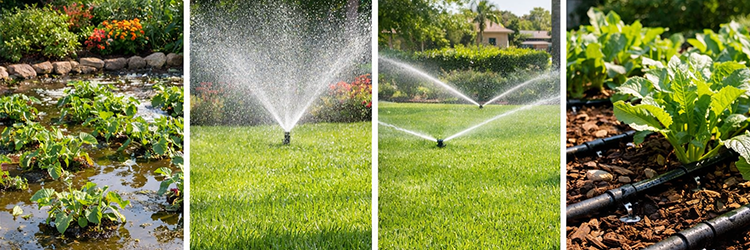
Not all irrigation systems are built the same. Each method delivers water differently, and efficiency varies considerably between them. Here is a brief overview before we focus on the one that performs best.
Flood Irrigation
Flood irrigation releases large amounts of water across open ground and allows it to soak in over time. It is rarely used in residential landscapes today. Efficiency typically sits between 40 and 50 percent. More than half of every gallon applied is lost before it reaches any plant root.
Spray Systems
Spray heads broadcast water in a fan or mist pattern, most commonly used over turf. They are straightforward to install but vulnerable to wind, high temperatures, and overspray onto driveways and hardscapes. Efficiency ranges from 50 to 70 percent, and in Palm City’s heat and afternoon breezes, that number often sits at the lower end.
Rotor Systems
Rotors deliver water in rotating streams across wider lawn areas. They apply water at a slower rate than spray heads, which reduces runoff on compacted soils. With proper installation and spacing, rotors can reach 60 to 75 percent efficiency. They work well for large open turf areas, but cannot target individual plants in mixed garden beds.
Drip Irrigation
Drip irrigation delivers water slowly and directly to the root zone of each plant through tubing and emitters placed at or just below the soil surface. Because water goes exactly where plants need it with almost no evaporation and no runoff, efficiency regularly reaches 85 to 90 percent. It is the most water-efficient method available for residential landscapes, and it is where we will spend the rest of this article.
Why Is Drip Irrigation the Most Efficient Method
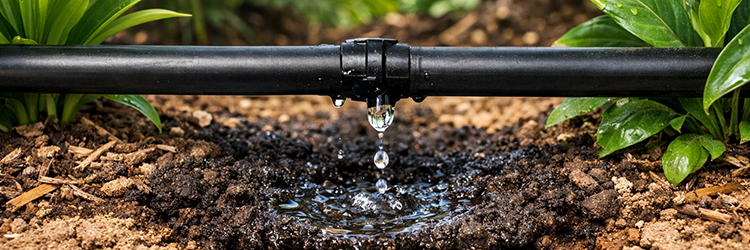
The efficiency advantage of drip irrigation comes down to one thing: precision. Instead of broadcasting water over a wide area and hoping enough soaks into the root zone, drip systems target each plant individually. That change in delivery from broad to specific is what drives every benefit that follows.
For Palm City homeowners, that precision matters more than it does in most other regions. Florida’s climate creates conditions where water loss through evaporation and runoff is exceptionally high, and where overwatering is just as damaging as underwatering. Drip irrigation addresses both problems at once.
The Real Benefits of Drip Irrigation for Florida Homeowners
Significant Water Savings
Drip irrigation systems typically use 30 to 50 percent less water than conventional spray methods, according to irrigation industry data. For a premium Palm City property with extensive planting beds, trees, and ornamental landscaping, that reduction translates directly into lower monthly water bills, often substantial enough to recover system costs within a few years.
Healthier Plants With Less Stress
Consistent, slow water delivery keeps soil moisture stable between cycles. Plants do not experience the wet-dry swings that occur with spray irrigation, which can cause stress, weak root development, and inconsistent growth. Root zones stay evenly moist, neither flooded nor dried out, which is the condition most landscape plants thrive in.
Reduced Fungal Disease Risk
South Florida’s warm, humid climate creates ideal conditions for fungal diseases in landscape plants. Many of these diseases are triggered or worsened by wet foliage exactly what spray and rotor irrigation produce. Drip systems keep water at the soil level and completely away from leaves, stems, and flowers, dramatically reducing the humidity conditions that encourage disease.
Natural Weed Suppression
When water is delivered only to the root zone of your plants, the soil surface between them stays dry. Weeds need surface moisture to germinate and establish. By keeping that moisture away from areas between plants, drip irrigation naturally suppresses weed growth without any additional effort or products.
No Runoff, No Overspray
One of the most visible inefficiencies in spray irrigation is overspray water landing on driveways, sidewalks, walls, and other hardscape instead of plant beds. This is not just a waste of water. In Florida, where water restrictions are enforced under South Florida Water Management District rules, irrigation runoff onto paved surfaces is a violation.
Works With Florida’s Unique Conditions
Palm City’s environment creates specific challenges that make drip irrigation even more valuable than it would be in a less demanding climate. High daytime temperatures drive rapid evaporation from soil surfaces and from airborne water droplets during spray irrigation. Afternoon winds off the Treasure Coast reduce the effective coverage of spray heads. And Florida’s alternating wet season and dry season means a system needs to respond differently at different times of year.
Drip irrigation sidesteps most of these challenges naturally. Water is delivered underground or at the surface, not through the air. There is no evaporation from droplets in transit. Wind does not affect water delivery. And because drip systems apply water so efficiently, they work within the day restrictions of local water management rules, even during the dry season.
Does Drip Irrigation Replace Spray and Rotor Systems Entirely
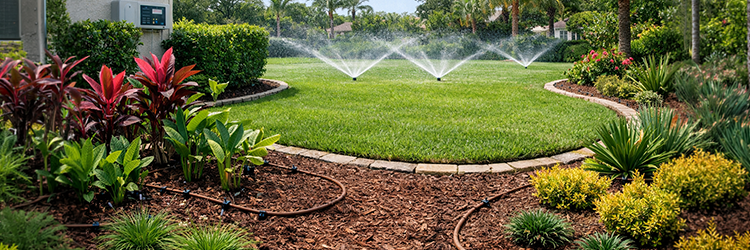
No, and a design that forces drip irrigation everywhere is not ideal either. The most efficient overall irrigation design for a Palm City property is one that matches the right method to the right area.
Large turf areas benefit from well-spaced rotor heads or high-efficiency spray nozzles that provide even coverage across the open lawn. Planting beds, trees, shrubs, and ornamental areas benefit from drip. The key is that each area is in its own zone, independently scheduled, so turf and beds are never forced onto the same watering cycle.
This zone separation is one of the most common improvements we make when upgrading existing systems. Properties where turf and beds share a zone are almost always overwatering one area while underwatering the other. Separating them and assigning the right delivery method to each immediately improves both efficiency and plant health.
What a Complete, Efficient Irrigation System Should Include
For Palm City homeowners investing in a premium landscape, here is what a properly designed system should incorporate:
- Drip irrigation for all planting beds, trees, and shrubs – targeting root zones directly at slow, consistent delivery rates
- High-efficiency rotors or spray heads for turf zones – properly matched nozzles and head spacing for even coverage
- Separate, independently scheduled zones – each aligned to the water needs of its specific plant type
- Smart controller with weather integration – adjusts automatically for rainfall and seasonal temperature changes
- Rain sensors and flow monitoring – prevent overwatering and catch leaks before they escalate
- Pressure regulation and inline filtration – protects drip emitters and ensures consistent performance across all zones
- Backflow prevention – required by Florida code, protecting your potable water supply
When all of these elements work together, the results are measurable.
Final Takeaway
Irrigation efficiency comes down to using the right method in the right place. While drip irrigation offers the highest efficiency, the best-performing systems combine drip, spray, and rotor methods based on the needs of each area.
For Palm City homeowners, success depends on proper zoning, thoughtful design, and adapting to local conditions like sandy soil and seasonal weather shifts. A well-designed system doesn’t just save water, it improves plant health and protects the long-term value of your landscape.
Ready to Water Smarter? Alpha Zeta Landscaping Can Help
Drip irrigation is the most efficient method available, but efficiency is the product of the entire system. The right emitter placement, proper hydrozoning, smart controller calibration, and professional installation are what turn a good irrigation plan into a system that performs year after year.
Palm City’s climate demands more from an irrigation system than most regions do. Sandy soils, high evaporation, seasonal rainfall extremes, and local water restrictions all require a design that is built specifically for this environment.
Alpha Zeta Landscaping has been designing and installing irrigation systems across Palm City and the Treasure Coast for nearly four decades. Our team understands the local soil conditions, plant needs, and water management regulations that determine whether a system truly performs. Whether you are starting fresh with a new installation or replacing a system that has been underdelivering, we are here to help you build something that works.