Key Takeaways
Before moving forward with any backyard lighting project, keep these core principles in mind:
- Layer your lighting – No single technique does everything. Path lights, uplights, moonlights, and accent fixtures each serve a different purpose. The best results come from combining them.
- LED systems are the standard for good reason – They last longer, consume far less energy, and hold up better in Palm City’s heat and coastal humidity than older halogen alternatives.
- Lighting should be planned, not added as an afterthought – A lighting system integrated into the landscape design from the beginning performs better visually and practically than one retrofitted later.
- Coastal-rated fixtures are non-negotiable – Salt air and moisture degrade standard fixtures quickly. Investing in components built for Florida’s environment protects your system long-term.
- Contrast creates depth – Resist the urge to light everything equally. Shadows are as important as light. Leaving some areas to recede makes the illuminated areas more dramatic and intentional.
Your backyard is more than a patch of grass behind your home. For many Palm City homeowners, it is an extension of the living space, a place for evening gatherings, quiet relaxation, and the kind of outdoor enjoyment that Florida’s climate makes possible nearly year-round.
Yet one of the most underutilized design tools in residential landscaping is lighting. When done right, garden lighting does not just illuminate a space. It shapes how the entire landscape feels after dark. It creates depth, drama, and an atmosphere that daytime landscaping simply cannot achieve on its own.
This guide walks through the most effective backyard garden lighting ideas, explains the purpose behind each approach, and helps you understand what separates a thoughtfully designed lighting plan from a basic setup of off-the-shelf fixtures.
Why Does Backyard Lighting Matter Beyond Aesthetics
Most homeowners think of garden lighting purely as decoration. That is only part of the picture.
Proper garden lighting delivers three core benefits:
- Safety – Illuminated pathways, steps, and transitions reduce the risk of trips and falls after dark, especially on properties with elevation changes or water features.
- Security – Well-lit outdoor spaces reduce dark hiding spots and can serve as a natural deterrent. Studies have shown that exterior lighting is one of the simplest upgrades homeowners can make to improve property security.
- Extended outdoor living – Florida’s evenings are often the most pleasant part of the day. Climate data shows evening temperatures in Florida are significantly cooler than daytime highs for much of the year, encouraging nighttime outdoor use. Good lighting allows you to use your backyard patio, garden, or pool area well into the night, effectively adding hours to your outdoor living season.
In Palm City, where premium properties often include expansive outdoor areas, a lighting plan that addresses all three of these goals is essential.
What Are the Most Impactful Backyard Garden Lighting Ideas
There is no single correct approach to garden lighting. The best plans layer multiple techniques together, each serving a different purpose. Here are the most effective ideas to consider for your backyard.
1. Path and Walkway Lighting
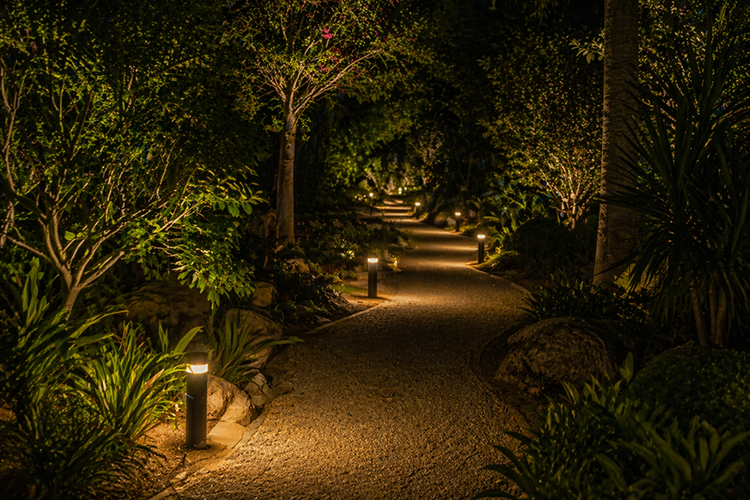
Pathway lights are often the first thing homeowners install, and for good reason. They define movement through a landscape, guiding guests from one area to another while adding a warm, welcoming glow along the way.
Low-profile bollard lights work well along formal garden beds. Smaller directional fixtures suit winding natural paths. The key is spacing; fixtures placed too far apart create a disconnected look, while fixtures placed too close can feel like a runway rather than a garden.
2. Uplighting for Trees and Focal Points
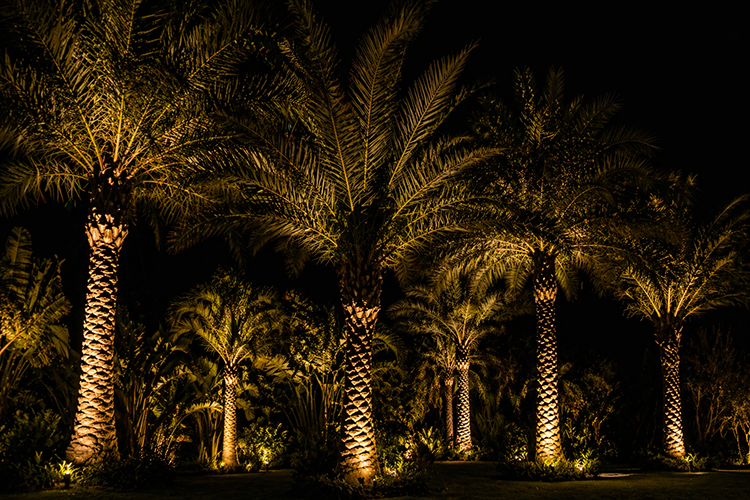
Uplighting involves placing a fixture at ground level and directing light upward into a tree canopy, architectural feature, or garden sculpture. The result is one of the most dramatic effects in landscape lighting. Shadows moving through leaf canopies, textured bark brought to life, and focal points that anchor the backyard at night.
In Florida landscapes, palms and large tropical trees respond beautifully to uplighting. The silhouette of a Royal Palm or a Sabal Palm illuminated from below creates a signature look that no overhead light can replicate.
The angle and placement of uplights matter greatly. Positioned too close to a trunk, the light flattens. Positioned too far away, it spills unevenly. A calibrated placement, adjusted to each specific tree, is what separates professional results from a DIY attempt.
3. Downlighting and Moonlighting Effects
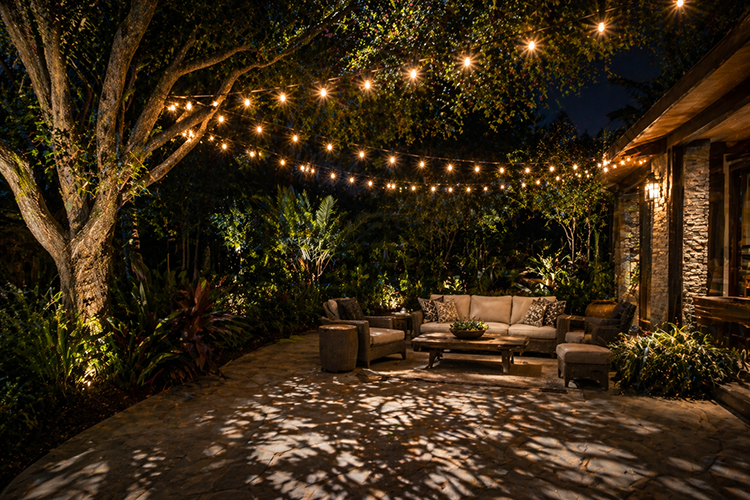
Downlighting works in the opposite direction, fixtures are mounted high in trees or on structures and aimed downward. When done well, this technique mimics the appearance of natural moonlight filtering through tree canopies.
Moonlighting creates a soft, layered glow across garden beds and lawn areas. It is particularly effective over seating areas, dining patios, or water features, where you want ambient light without the glare of a direct fixture.
This technique requires elevation, meaning the right tree placement or structural mounting points. It also benefits from precise aiming to avoid hot spots and achieve that natural, dappled effect.
4. Garden Bed and Accent Lighting
Garden beds are often neglected in lighting plans. Most homeowners light hardscape and trees but leave planted areas in complete darkness after sunset. This is a missed opportunity.
Small directional spotlights aimed at flowering shrubs, ornamental grasses, or specimen plants add color and texture to the nighttime landscape. Bromeliads, bird of paradise plants, and ornamental palms common to South Florida properties respond exceptionally well to this type of accent treatment.
The goal is not to flood the bed with light, but to pick out key plants that add visual interest and then let the surrounding planting fade naturally into shadow. Contrast is everything.
5. Step and Wall Lighting
Steps and retaining walls create natural opportunities for integrated lighting. Recessed step lights built into risers cast a clean wash of light without protruding into the visual field. Wall-mounted fixtures on outdoor kitchen areas, pergolas, or fence structures add dimension and eliminate dark zones around the perimeter of the yard.
For elevated properties common along the St. Lucie River and surrounding Palm City communities, step lighting is not just a design choice it is a practical necessity.
6. Water Feature and Pool Lighting
If your backyard includes a pool, fountain, pond, or waterfall, lighting transforms it completely after dark.
Submersible LED fixtures installed inside pools and fountains create a luminous glow that reflects off surrounding surfaces. Above-water uplights aimed at waterfalls or fountain jets catch the movement of water and turn it into a dynamic nighttime feature.
Pools illuminated with LED systems consume significantly less energy than older halogen systems while producing richer color and longer-lasting performance.
7. String Lights and Overhead Ambiance
String lights suspended between posts, pergola beams, or tree branches create a canopy of warm light over outdoor dining and seating areas. They are one of the most popular choices for entertaining spaces because they establish an intimate, social atmosphere without requiring complex installation.
In Florida’s humid coastal climate, not all string light systems are created equal. Fixtures rated for wet and coastal conditions perform far better over time than consumer-grade options that degrade quickly in salt air and moisture.
8. Silhouette and Shadow Lighting
Silhouetting is a technique where light is placed behind a plant or object, aimed at a wall or fence. The plant itself remains dark while its outline is cast dramatically onto the surface behind it.
Shadow lighting takes a similar approach but positions the light in front of the plant at a low angle, throwing the plant’s shadow onto a wall. Both techniques create bold, graphic effects that add a layer of artistic intentionality to the landscape.
These approaches work best with plants that have strong, distinctive forms, such as agaves, ferns, ornamental grasses, and sculptural tropical species, all of which produce compelling silhouette results.
What Mistakes Do Homeowners Commonly Make With Garden Lighting
Understanding what to avoid is just as valuable as knowing what to do. The most common mistakes we see on residential properties include:
- Over-lighting – More fixtures do not mean better results. Excessive light washes out contrast and eliminates the depth that makes a landscape compelling at night.
- Ignoring dark zones – Lighting only the primary areas while leaving surrounding sections in complete blackness creates visual imbalance and potential safety gaps.
- Mismatched color temperatures – Mixing warm and cool fixtures throughout a landscape creates a disjointed, inconsistent appearance.
- Neglecting maintenance access – Fixtures buried too deeply in plant growth or placed without consideration for future access make system upkeep difficult.
- Using indoor-rated or consumer-grade products outdoors – Florida’s heat, humidity, and salt air degrade sub-standard fixtures quickly.
How Does Professional Lighting Design Deliver Better Long-Term Results
A basic lighting setup can add some brightness to a backyard. A professionally designed system does something far more significant: it creates a landscape experience that is intentional, balanced, and built to last.
Professional lighting designers evaluate the full landscape before placing a single fixture. They consider sight lines from inside the home, the way light interacts with specific plant species, the long-term growth of trees and shrubs, and the integration of lighting controls into a system that the homeowner can manage effortlessly.
The result is not just better looking it is smarter. Fixtures are positioned for maximum visual impact and minimum energy waste. Zones are separated, so different areas of the yard can be controlled independently. Systems are designed for the local environment, which in Palm City means accounting for coastal humidity, salt air, and Florida’s unique subtropical light quality.
At Alpha Zeta Landscaping, our team approaches garden lighting as an integral part of the overall landscape design. With nearly four decades of experience transforming properties across Palm City and the Treasure Coast, we understand how light behaves in this specific environment, how it plays off coastal plantings, how salt air affects fixture longevity, and how the right lighting plan elevates a premium property into something truly exceptional.
Homeowners who invest in a thoughtfully designed lighting system consistently find that it becomes one of the most-used and most-appreciated features of their outdoor space.
Final Takeaway
A well-executed garden lighting plan is one of the most lasting improvements you can make to a Palm City property. It does not just make a backyard look better at night, it changes how the space is used, how safe it feels, and how much value it delivers over time.
The difference between a basic setup and a professionally designed system comes down to intention. Every fixture placement, every color temperature choice, every zone in the plan should serve a clear purpose and those decisions require experience with both lighting design and the specific demands of Florida’s coastal landscape.
When you are ready to take your outdoor space from ordinary to exceptional, the team at Alpha Zeta Landscaping brings nearly four decades of Palm City expertise to every lighting project we design. The result is a landscape that performs beautifully after the sun goes down and continues to do so for years to come.