Key Takeaways
Before you move forward with any backyard lighting project, keep these core principles in mind:
- Layer your lighting: Combine uplighting, path lighting, accent lighting, and task lighting for a balanced, multi-dimensional result rather than relying on a single fixture type.
- Choose coastal-rated fixtures: In Palm City’s salt air and humidity, fixture quality is not a place to cut corners. Marine-grade and corrosion-resistant materials are essential.
- Stick to a consistent color temperature: Mixing warm and cool light tones in the same zone creates visual confusion. Choose a palette and commit to it across the entire design.
When the sun sets in Palm City, a well-lit backyard becomes one of the most valuable features on your property. The right lighting doesn’t just brighten a space, it creates atmosphere, adds safety, and extends your time outdoors well into the evening. Yet many homeowners settle for generic flood lights or a few solar stakes along a pathway, missing the full potential of what thoughtful backyard lighting can achieve.
This guide covers 12 backyard lighting design ideas, a 5-step plan for lighting a dark yard, a quick-reference table for each part of the yard, and answers to common questions. It comes from Alpha Zeta Landscaping, a Palm City landscape design, build and maintenance company that has served Martin County and the Treasure Coast since 1985.
Why Does Backyard Lighting Matter More
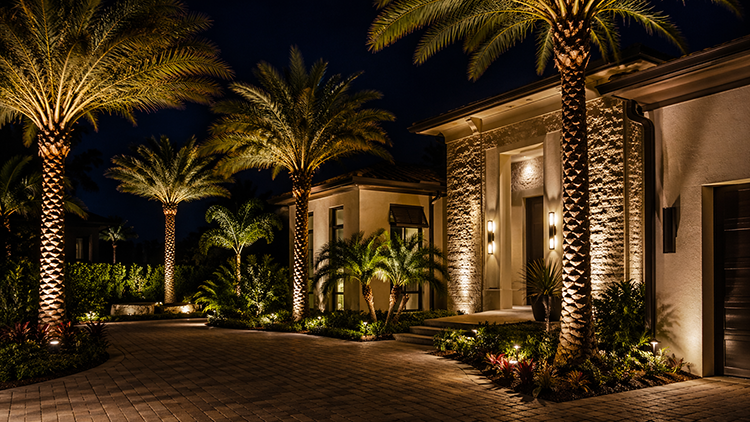
Lighting is one of the most underestimated elements of outdoor design. In Palm City and along Florida’s Treasure Coast, evenings are often the most comfortable part of the day. Temperatures drop, breezes come off the water, and the outdoors becomes an extension of your living space. Without proper lighting, that evening window goes largely unused. With it, your backyard becomes a destination.
Beyond comfort and aesthetics, backyard lighting plays a real role in safety and security. Lit pathways reduce the risk of trips and falls. Illuminated entry points deter unwanted visitors. Properly placed fixtures guide guests through your property with confidence, especially on larger estates with multiple outdoor zones.
12 Backyard Lighting Design Ideas for Florida Yards
The best backyard lighting designs combine several of these ideas instead of relying on one fixture type. Pick the ones that match how you use your yard at night.
1. Uplight Palms and Oaks
Uplighting puts a fixture at ground level and aims it up into a tree. It is the quickest way to give a dark backyard depth. Sabal palms, royal palms and live oaks all light well because their trunks and canopies show texture at night.
Tip: Set the fixture about 1 to 3 feet from the trunk. A tall, slim palm needs a narrow beam. A wide oak canopy needs a wider beam, or two fixtures from different sides.
2. Moonlight From the Canopy
Moonlighting is uplighting in reverse. A fixture mounted high in a large tree points down, so light filters through the leaves and casts soft, moving shadows on the lawn or patio. It looks like moonlight, not a lamp.
Tip: Hide the fixture in the branches so guests see the glow, not the light. Mature oaks work best. Palms rarely have the branch structure to hold a fixture.
3. Light Paths in Pools, Not Lines
Path lights keep people from tripping between the patio, pool and side yard. Low bollards, mushroom-style caps and recessed in-ground lights all work. Aim for pools of light that just touch, not a bright, solid strip.
Tip: Many designers start with fixtures about 6 to 10 feet apart, then adjust after seeing the beam spread at night. Staggering lights on alternate sides looks more natural than a straight runway.
4. Add Step and Hardscape Lights
Steps, raised patios, seat walls and retaining walls are where people trip after dark. Small lights set into the risers or tucked under a wall cap mark each edge without glare.
Tip: Choose fixtures with a hood or louver so the light lands on the step, not in people’s eyes.
5. Make the Pool and Water Features Glow
Underwater LEDs turn a pool into a soft, glowing centerpiece. A few accent lights on a fountain, spillway or pond add reflections that daytime can’t. In Florida, pools get used well after sunset, so light the deck edges and steps too, not just the water. For planting ideas around the water, see our pool landscaping ideas.
Tip: Keep deck lighting warmer and dimmer than the pool so the water stays the focal point. Any fixture in the water must be rated for underwater use.
6. Treat the Covered Patio, Pergola and Outdoor Kitchen as a Room
Covered outdoor spaces need their own plan. Use bright, focused task light over the grill and prep counter, softer light over the dining table, and dimmable light for lounging. Recessed ceiling lights, pendants and string lights all fit here. See also our guides to outdoor kitchen must-haves and pergola design ideas.
Tip: Put the kitchen, dining and lounge lights on separate switches or zones, so the work light can go off once dinner is served.
7. Keep Seating and Fire Pit Areas Low and Warm
Around an outdoor sofa, sectional or fire pit, people want to see faces, not floodlights. Low light works best: lanterns, string lights overhead, step lights in a nearby seat wall, or uplit plants just behind the seating.
Tip: Aim nothing straight at the seats. Light the surroundings and let the glow spill in. Warm 2700K light flatters skin tones and matches firelight.
8. Use Silhouettes and Shadows
Put a light behind a striking plant, such as a sago palm, agave or clump of ornamental grass, and aim it at a wall or fence. The plant becomes a dark shape against a soft glow. Shadowing does the opposite: a light in front throws the plant’s shadow onto the wall.
Tip: Both effects work best on a plain, light-colored wall a few feet behind the plant.
9. Graze or Wash the Back of the House
Most homeowners light the front of the house and forget the back, which is the side they look at from the patio. Grazing sets lights close to a textured wall, such as stone, stucco or columns, to show its texture. Washing sets them farther back for a smooth, even glow.
Tip: Keep fixtures out of window lines so light doesn’t shine into bedrooms.
10. Pick Out a Few Garden Bed Accents
Light a few standout plants in each bed, not all of them. A bird of paradise, a foxtail palm or a specimen shrub becomes a focal point, and the plants around it stay in shadow for contrast.
Tip: Use adjustable stake fixtures in beds. Florida plants grow fast, and lights may need to move as they fill in.
11. Blend Security Lighting Into the Design
Security lights matter, but a few harsh floodlights can wash out every other effect in the yard. Put motion-activated floods on side yards, gates and dark corners, and keep them on a separate circuit from the decorative lighting so they only come on when needed. Our guide to backyard flood lights covers placement and brightness in detail.
Tip: Choose floods you can aim and shield, so light stays in your yard and out of your neighbor’s.
12. Control It All With Zones, Timers and Scenes
Smart controls let you group lights into zones and set scenes: bright for a party, low for a quiet night by the pool, off at midnight. A photocell or timer turns lights on at dusk, so you never come home to a dark yard.
Tip: Plan zones before installation. It is far easier to wire a separate zone for the pool or patio at the start than to add one later.
How Do You Light a Dark Backyard? A 5-Step Plan
To light a dark backyard, walk it at night and note where people walk, sit and trip. Light those paths and steps first, then add soft light where people gather, and finish with a few accent lights on trees or the house. Use one warm color temperature and put each area on its own zone.
- Walk the yard after dark: Note dark corners, steps, and the route from the back door to the pool, gate and garage.
- Map your zones: Patio, pool, paths, lawn, garden beds and side yards. Give each one a job: safety, gathering or show.
- Pick 3 to 5 focal points: A specimen palm, a water feature or a textured wall. With too many focal points, none stand out.
- Choose a light layer for each zone: Task light for paths, steps and the grill; ambient light for seating; accent light for focal points.
- Set color and controls: Pick one warm color temperature for the whole yard (2700K to 3000K suits most Florida landscapes), then decide when each zone turns on and off.
When Alpha Zeta Landscaping designs a backyard lighting system, the work follows the same order: a consultation about your goals, a custom design with fixture selections and placement plans, installation that covers trenching, wiring, fixture mounting and programming, and a nighttime walk-through to fine-tune every fixture before the project is complete. Most residential lighting installations in Palm City take 1 to 3 days.
Which Backyard Lighting Styles Create the Best Ambiance?
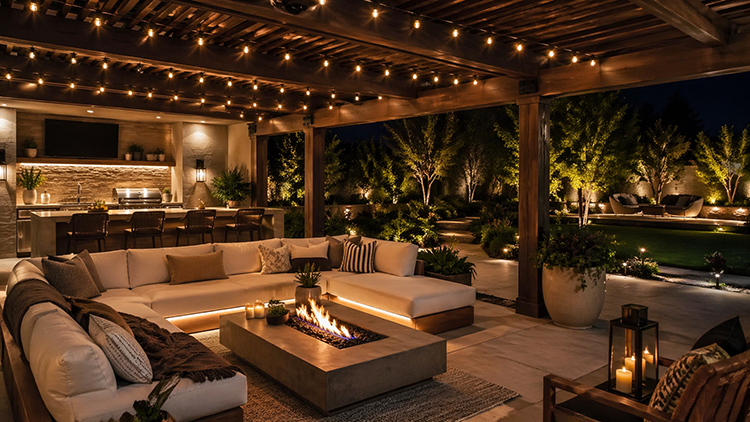
For a relaxed mood, most Florida backyards suit warm, layered lighting: amber-toned uplights on palms, low light around seating and soft accents near the pool. Modern homes can use cleaner, slightly cooler light on the architecture. The best style matches your house and how you use the yard at night.
- Tropical and Coastal: Warm amber tones, uplighting on palms and ornamental grasses, soft pool accents, and minimal hardscape lighting. This style suits Palm City’s natural landscape beautifully.
- Modern and Minimalist: Clean lines, recessed fixtures, cooler white tones, and emphasis on architectural features. Best suited for contemporary homes with geometric landscaping.
- Classic and Traditional: Warm tones, ornate fixture styles, well-lit pathways, and symmetrical placement. Works well with formal garden designs and older Florida estates.
- Resort and Entertainment: Layered lighting with theatrical presence, including pool lighting, bar area illumination, and feature lighting, all designed to support gathering and entertaining.
What Should Palm City Homeowners Know About Coastal Lighting Conditions
Florida’s coastal environment introduces challenges that standard lighting equipment is often not built to handle. Salt air accelerates corrosion on metal fixtures. High humidity can penetrate poorly sealed casings. Summer storm systems bring wind, rain, and debris that will compromise fixtures not rated for genuine outdoor use.
For homeowners in Palm City and along the Treasure Coast, fixture material and weatherproofing are essential. Brass, copper, and marine-grade aluminum are the most appropriate choices for coastal applications. Lower-grade zinc or uncoated fixtures will corrode within a season or two, forcing premature replacement and additional cost.
This is one reason why working with a landscape lighting professional familiar with Florida’s conditions makes such a practical difference. The right fixtures, properly installed and sealed, will deliver lasting performance that generic hardware store options simply cannot match.
How Has LED Technology Changed Backyard Lighting
LED technology has fundamentally transformed what’s possible in landscape lighting over the past decade. Modern LED fixtures consume up to 75% less energy than traditional halogen or incandescent options while lasting up to 25 times longer. For a system with dozens of fixtures running nightly, the energy savings are substantial.
Color temperature control is another major advantage. LED systems allow precise selection between warm amber tones, neutral whites, and cool daylight equivalents. This flexibility gives homeowners and designers the ability to fine-tune mood and atmosphere in ways that older lighting technologies never allowed.
Smart lighting controls have also emerged as a game-changer. Programmable timers, smartphone apps, and zone-based controls allow homeowners to set different moods for different occasions. Bright and functional for a garden party, soft and ambient for a quiet evening by the pool. Automation features like dusk-to-dawn sensors reduce energy waste and eliminate the hassle of manual operation.
Why Should You Hire a Professional for Landscape Lighting Installation
There’s a clear difference between a lighting system installed by a professional and one assembled from off-the-shelf components by a homeowner with a weekend and a shopping cart. The gap shows in the visual result, in the system’s durability, and in the long-term reliability of the installation.
Professional landscape lighting designers understand how to layer light. How to balance brightness levels between zones, avoid glare, create focal points, and maintain visual harmony across the entire property. These are judgment calls developed through years of experience.
There’s also the technical side. Proper wiring, transformer sizing, waterproofing, and compliance with local electrical codes are all areas where professional installation pays dividends. A system installed incorrectly can be a safety hazard.
The team at Alpha Zeta Landscaping has spent nearly four decades designing and installing landscape lighting systems across Palm City and the Treasure Coast. Each project begins with a thorough consultation to understand the homeowner’s goals, the property’s specific character, and the Florida coastal environment it needs to perform in. The result is a customized lighting system built to last and designed to impress.
Common Backyard Lighting Mistakes to Avoid
Even homeowners with good taste can end up with lighting that doesn’t quite work. The most common errors we see include:
- Over-lighting: More fixtures do not mean better results. Over-lit landscapes feel harsh and lose the contrast and shadow that make nighttime outdoor spaces visually interesting.
- Ignoring light pollution: Fixtures aimed at neighbors’ properties or toward the sky waste energy and create unnecessary nuisance. Well-directed fixtures keep light where it belongs.
- Mismatched color temperatures: Combining warm and cool fixtures in the same zone creates visual inconsistency. A cohesive design sticks to a deliberate color temperature palette.
- Using indoor-rated fixtures outdoors: A common and costly error. Fixtures not rated for outdoor exposure degrade quickly in Florida’s humidity and rain.
- Neglecting maintenance: Landscape lighting requires periodic adjustment, cleaning, and bulb replacement to continue performing at its best. Skipping maintenance leads to gradual system decline.
Final Takeaway
Your backyard has enormous potential after the sun goes down – potential that most homeowners never fully tap into. A thoughtfully designed lighting system does more than illuminate a space. It creates an experience and turns your outdoor area into somewhere you genuinely want to spend time every evening.
Make the Most of Your Backyard After Dark
Great backyard lighting is about adding the right light in the right places. From uplighting your palms and accentuating architectural details, to guiding guests safely along pathways and creating an inviting glow around your outdoor living areas, every fixture and every angle contributes to a larger vision.
Palm City homeowners have a genuine advantage in this regard. The tropical landscape, the warm evenings, the outdoor-oriented lifestyle. All of it creates a natural stage for exceptional outdoor lighting. What’s needed is a design that honors that environment and brings it to life after dark.
At Alpha Zeta Landscaping, we’ve been helping Treasure Coast homeowners transform their properties with custom landscape lighting systems for nearly four decades. Our process is collaborative, our designs are tailored, and our installations are built to perform in Florida’s demanding coastal conditions. If you’re ready to experience your backyard in a whole new light, our team is here to make that vision a reality.